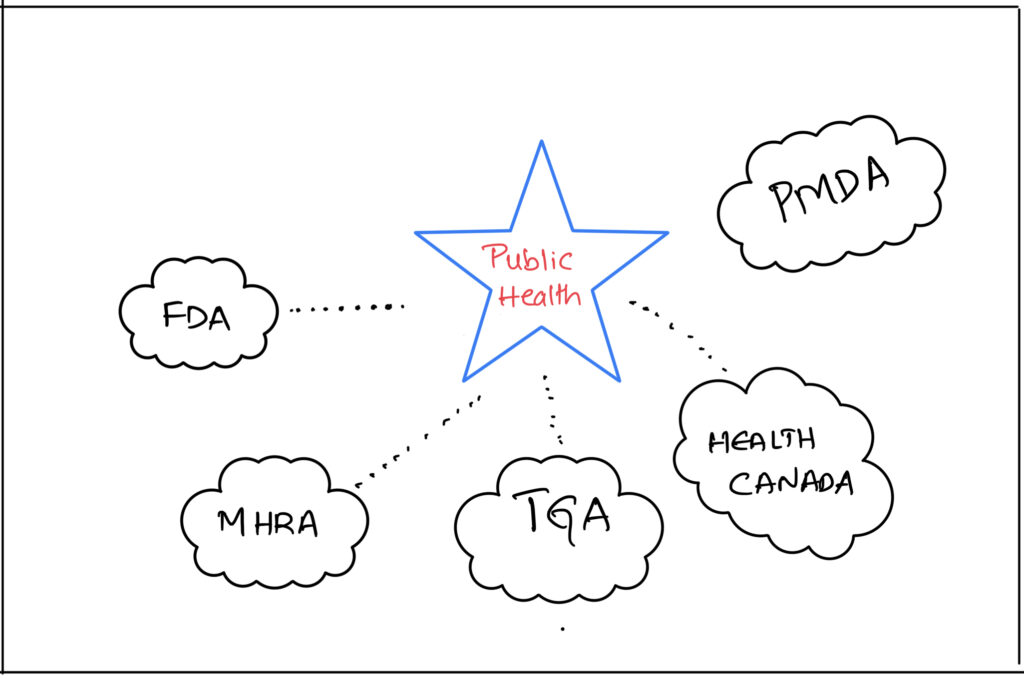
That is also a reason why majority of drug regulatory authorities are nested under “Department of Health” within their Country.
For example:
Food and Drug Administration (FDA), Drug Regulatory Authority in USA is nested under “The Department of Health and Human Services”.
Medicines and Healthcare products Regulatory Agency (MHRA), the Drug Regulatory Authority in UK falls under “Department of Health and Social Care”
Health Canada (HC), the Drug Regulatory Authority in Canada falls under “The Federal Ministry of Health”
Therapeutics Good Administration (TGA) of Australia falls under Australian Government “Department of Health”
So, how do these authorities protect the public health?
Let us look into the mission statements of some of these agencies to get a better idea:
First Paragraph of United States FDA Mission says:
“The Food and Administration is responsible for protecting the public health by ensuring the safety, efficacy, and security of human and veterinary drugs, biological products, and medical devices; and by ensuring the safety of our nation’s food supply, cosmetics, and products that emit radiation”
“The mission of the inspectorate is to protect the pubic health by making sure that medicines are available and are of right quality, applying appropriate standards of regulation”
Here is the mission statement from Republic of India’s Central Drug Standard Control Organization (CDSCO):
“To safeguard and enhance the public health by assuring the safety, efficacy and quality of drugs, cosmetics and medical devices”
Australia’s TGA describes the following in their regulatory performance framework:
“The TGA administers the Therapeutic Goods Act 1989, applying a risk management approach designed to ensure therapeutic goods supplied in Australia meet acceptable standards of quality, safety and efficacy (performance), when necessary.
You can see the commonality between these statements. Irrespective of processes they use to regulate drugs or cosmetics, their bulls eye is to protect the “Public Health”.
In my next post, I will write about how these mission statements fit into drug development.
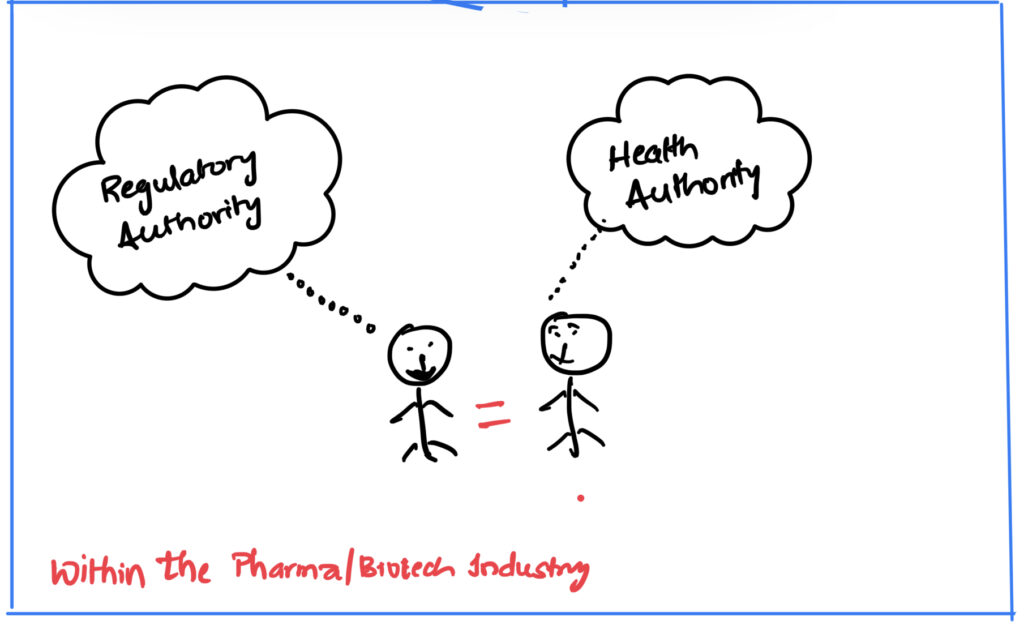
After I started working in Regulatory Affairs, I started noticing that we use regulatory authority and health authority interchangeably when talking about organizations such as FDA, Health Canada or MHRA (the organizations to which we generally submit drug applications for various purposes).
What is the difference between both terms? Can we really use them interchangeably? Is there a time when we should specifically use “Health Authority”?
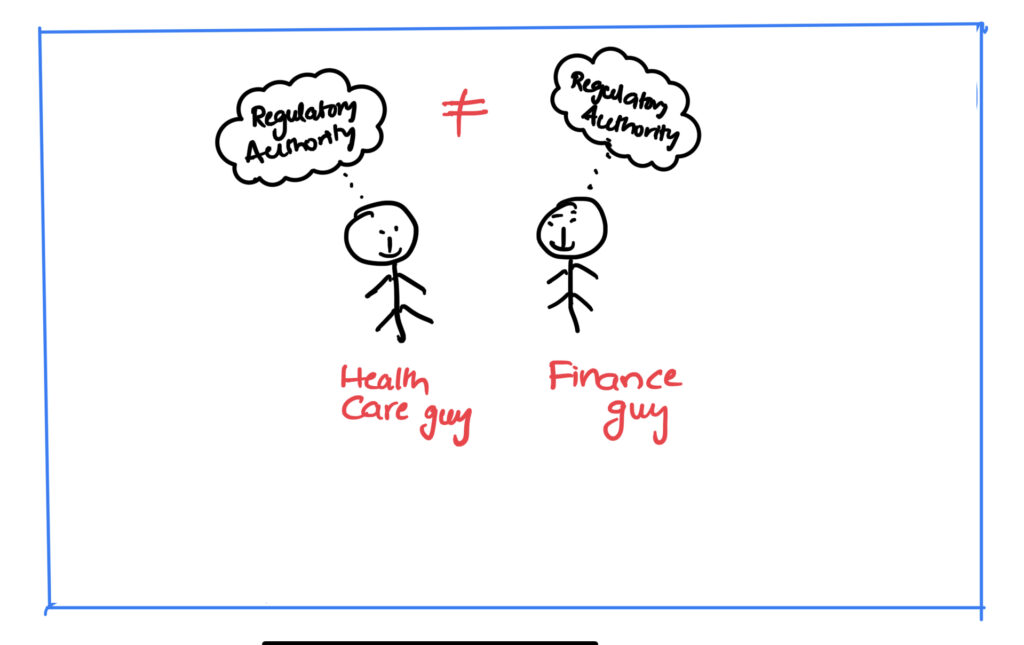
Regulatory Authority is a government agency that regulates businesses in the public interest. In other words, it is an administrative body of government with administrative responsibilities towards its public. Regulatory Authorities define regulations. Regulation is a rule or order telling how something is to be done. In general, whether we know it or not, regulations have an impact in our daily life. They are not specific to a single Industry. Industries such as health care (Pharma/Biotech), finance, utilities, banking are regulated industries. And each industry is regulated by one or more regulatory authorities. For example, within US, Federal Deposit Insurance Corporation (FDIC) and Federal Reserve Board regulates Banks; FDA regulates Food and Drugs.
Because the products of Pharma/Biotech field impact public health, we are governed by regulations related to health. Hence, we use regulatory authority or health authority within the industry interchangeably. All health authorities are regulatory authorities but not all regulatory authorities are health authorities. Within our Industry, it is ok to use Health Authority or FDA or Regulatory Authority interchangeably. But you may not be talking about the same agency or authority if you are in a group that has people from different industries.
In a room full of people with different industries, if it every happens, better use the term “Health Authority” or specific agency (such as FDA) to refer to FDA.
Before I started my career full time in Regulatory Affairs, my view of it is that Regulatory Affairs gets involved in multiple areas of drug development and as someone who has experience in different areas, i felt it would be a perfect fit for me. But I started pondering about “What is Regulatory Affairs” not until someone asked me what do I do and what it means?. I realized I never articulated it for myself.
I have been working in this profession for about 3 years as of this writing. But when I stumble across this question, i usually do not define in a way I used to about my previous jobs (It was much easier to answer what I do while I was working as a non-clinical scientist in academia or a drug product development scientist in Industry).
Here is how that conversation goes:
My initial responses to someone who asks me what I do in career: “I work in Regulatory Affairs”. At least people outside of Pharmaceutical/Biotech space ask me “what is regulatory affairs”. I tell them, I liaise between regulatory agencies such as FDA and Sponsor company.
“What does that mean?” – They exactly want to know what is it?
I respond “I submit different applications to FDA to perform clinical trials or for approval of drugs to market them”.
“Ohh……..So you do document management then”.
“Yes, it is part of it but i work on regulatory strategy too”
“What is regulatory strategy?” They ask.
“Regulatory strategy involves collaboration with different subject matter experts (clinical, non-clinical and quality teams) to drive drug development and overcome any hurdles in developing and marketing of drugs.
Fact is that Regulatory Affairs is all of the above things, it has strategy component to it, writing component to it, document management component to it, project management component to it, leadership component to it and probably there are few other components that I am not aware of. All these are different roles and responsibilities within Regulatory Affairs but do not define what Regulatory Affairs is.
After couple of such conversations, I felt I really need to know “What Regulatory Affairs” is and should be able to define it precisely during my next such conversation. I started looking it up.
One book defined regulatory affairs as: “As a discipline, regulatory affairs covers a broad range of specific skills and occupations. Under the best of circumstances, it is composed of a group of people who act as a liaison between the potentially conflicting worlds of government, industry, and consumers to help make sure that marketed products are safe and effective when used as advertised”.
Another book suggests that “Regulatory affairs liaisons manage the process of working with project teams and interacting with the regulatory health agencies, such as the FDA or the International Conference of Harmonization (ICH)”.
Another book noted that “The Regulatory affairs department of a pharmaceutical company is responsible for obtaining approval for new pharmaceutical products and ensuring that approval is maintained for as long as the company wants to keep the product on the market”.
Please note that the above books gave a detailed definition and I put a concise version above.
Eventually, I came up with my own answer for it:
“Regulatory affairs is a core that holds different parts of pharmaceutical/biotech industry together from discovery phase through marketing and life cycle management and it acts as a bridge between Regulatory Authorities, Industry and public”.
I believe many professionals working in Regulatory Affairs and Pharma/Biotech industry in general agree with this one. The strategy, documentation, management, writing etc are actually the responsibilities of Regulatory Affairs professionals.
If someone asks me next time, I know what to answer.
Drug Development Is A Technically Deep Field With So Many Moving Parts. Regulatory Affairs Is Like A Core That Holds All These Parts Together And Liaise Between The Sponsor (Or A Company Developing The Drug) And Regulatory Agencies (Eg: FDA In US; MHRA In UK) To Protect The Health Of Public By Providing Safe And Efficacious Drugs.
Regulatory Affairs Professionals Are Involved In Reading A Lot: Regulations, Laws, Guidance Documents Etc. A Lot Of Patience Is Required To Read And Understand All These Documents. Even After Putting Those Long Hours Of Reading, You May Forget It Next Time When You Need It Because Regulatory Affairs Is Too Dry Of A Subject To Stick. Of Course, Things Do Tend To Stick As You Read/Do Them Again And Again. But, To Keep Up With Huge Volumes Of Guidance Documents Is A Gigantic Task.
I Am Relatively Young In This Regulatory Field As Of This Writing And Have About 12 Years Of Experience Between Academia And Industry Before Joining Regulatory. One Way To Grow In The Regulatory Is By Doing A Lot Of Reading And Use It Whenever Necessary. Similarly, Few Ways To Learn Anything Quickly Or Get What You Learned To Stick Is By Teaching It To Others Or By Writing Them Down In Your Own Words And That Is What I Am Trying To Do At Regulatory Buddy. Why Not Articulate Whatever I Am Reading So That It Sticks To Me And May Help Others. And Hence This Publication Or Blog.
My Idea Is To Give Following Perspectives To Different Guidance Document Or Articles So That It Is Easy For A Reader To Understand: Why, When, Who, Where And How. But Then, Different Documents Are Different And I Highly Doubt If One Size Will Fit All. So, I Will Tailor As Needed As I Travel Along. I Am Still Learning And Will Always Do.
It is almost end of the current year and a new year is in sight. You are probably taking some well deserved break as well as pondering about setting some new year resolutions. We all hope that a New Year will bring new luck and start things a fresh and set these new year resolutions and start announcing them to friends and family.
Wait a minute. Before we move to new year resolutions, did you think about what happened to the current years resolutions that you set almost an year ago. Are those resolutions still with you or did they meet their grave long ago?
If you are one of those who belong to the elite group people who have met the current years resolutions. Excellent work. Happy New Year and you probably don’t need this article (please read on anyway).
If you are one of those who forgot about those resolutions long ago or did not meet your resolutions. Please read on.
Before I go further, here are some infamous statistics:
About 23% of people give up on their new year resolutions within first week of the new year and staggering 64% give up within first month. And 91% of the people do not meet their resolution.
I was part of that infamous statistics too – until I started reflecting on why I am not meeting these resolutions. Reflection is a game changer.
Reflection helped me understand why I was unable to meet those resolutions and plan carefully before I set further resolutions.
What is a resolution anyway and why do you set it around New Years Day?
Resolution is a firm decision to do something. In a way, resolution is like setting a goal for yourself. People set new year resolutions more so because it is a new year (and nothing to do with the stage of their life) and for humans anything new is exciting and anything old is boring.
The fact is that the resolutions can be set at any time of the year. However, New year resolutions kind of become a cultural thing and people set them anyway irrespective of what stage of life they are at.
Why people fail to meet their new year resolutions?
1. “New” fizzles out: One main reason people can’t meet their new year resolutions is because resolutions are made out of emotion that arises due to excitement around new-ness. Once that new-ness fizzles out, your excitement fades out and you are back to your old ways. Resolutions work better when you are determined from inside and not when determined by excitement.
2. You have set wage goals and not specific goals – One of the reasons why we fail at any goal (and not particularly new year goals) is because we set them too broad. If you want to work out and lose 20 lbs is a wage goal. Instead I will work out 5 days a week for 30 minutes a day until end of June and lose 20 lbs is a specific goal. Which one do you think has higher chances of achieving?
3. You did not prioritise or did not account for the hurdles that you face in your usual routine – The resolutions are set around the holiday season where you have a lot of time for yourselves and you are relatively stress free. But, when the reality kicks in when you start going back to work or college or manage your kids – priorities. Chances are that you haven’t accounted for those when you are setting up your new year goals. Other way to put this is you did not prioritise your resolution.
4. You lacked accountability and discipline – Discipline is key. Few people are self motivated and very disciplined. They are accountable for themselves. But most of us may not be as disciplined and if there is no accountability, chances are that we will be off track very soon.
5. You did not track your resolutions – If you don’t track your resolutions, you don’t know how you are progressing and if you don’t know your progress, you get demotivated very soon.
Reflect Before You Resolve
Why Reflection matters?
Reflection will help you understand what you are lacking. Are you seriously serious about your resolutions or are you having resolutions for the sake of having the resolutions.
If you are really serious about your resolutions, then why did you fail? Is it because you lacked discipline? Or is it because you had unrealistic goals? Or is it because you did not prioritize? Or is it because you did not track them?
If you have reflected on why you failed with your prior years resolutions, you become aware of why you were not able to meet your goals. If you become aware of why you were not able to meet your goals, you can set more realistic resolutions and create systems (set specific goals, prioritize them, have an accountability partner and be disciplined and track them) to meet the resolutions.
Before you set the New Year’s Resolutions, please do yourself a favour and reflect on what happened to your prior resolutions.
So, you lost your job in Tech layoffs and you are on H1B and you need to find a job within 60 days to maintain status.
This is the season where recruiting is slow and there is a possibility of recession lurking around the corner to make things more complicated. Best case scenario probably is to find the job within 60 days. I am not a lawyer, but I imagine that the other good scenarios could be to switch to a dependent visa if you have a spouse working on a valid visa or switching to F1 to go back to college. All of which will give you some time before you find your next job. But, what if you are in a situation without any of these options and your time is running out and you have no other option but to go back to the country you came from.
I understand that you are in panic mode now worried about the uncertain future or worse yet worried that there is no future.
I was in similar situation several years ago and If there is anything that I can tell you from my experience, it is that the future isn’t uncertain, at least to those who are open and hopeful.
Back then, I was requesting for time off to attend my sister’s wedding in my country. I had to get my visa stamped because of change of status from F1 to H1B. My leave request was turned down several dozen times as company believed that I may get stuck in the country for several months as the visa officer may issue a 221G form instead of directly granting the visa on the spot. But, I had a 50% chance of getting visa approved on the spot without 221G and I want to take that chance to attend my only sister’s wedding (a life time event).
After hundreds of requests, my then company gave me two choices:
Choice 1: Stay and work
Choice 2: Resign and leave
I felt my future was uncertain. My colleagues and few friends suggested me not to take a chance by going back to my country as that means doors to US will be shut and it could be tough to adopt to the working culture in my country. I tried hard to convince my company and 4 days before my sister’s wedding and 2 days before the flight, I made a decision and here is exactly how my thoughts ran:
“I am not going to miss this one time life event. Life will give opportunities again but this event is not going to come back. I will try for my visa. If I don’t, I will apply for a post doctoral position in any University and chances are that USA may welcome me on a different visa. In the worst case scenario of USA doors shut, I will work in my country teaching students at college I studied. As long as I am still alive in my worst case scenario. I am good”. The moment I made this introspection, I decided to take option 2 because I am going to be alive in my worst case scenario.
I gave a verbal resignation and flew to attend my sister’s wedding. I got my visa approved on the spot (no 221G) one day before my sister’s wedding and I came back to USA 10 days later. Luckily for me, my payroll was running until after I returned because of the PTO I accumulated. I interviewed for one company while in my country and 2 companies within 2 days after landing in the USA and within a month from there, I started my new job.
While my situation was not entirely same as what you are going through now, this entire experience changed my life in terms of decision making and I am thankful that this situation made me much bolder.
Here are the reasons why I ask you not to panic if you have all your doors shut while on H1B and all doors are shut.
Fortune favors the brave: In these situations, you tend to take shortcuts. But if you have tried all your options and looking at the exit door. Do the right thing and right things will happen to you. Nature somehow aligns things for you when you take right and bold decisions.
You can always return to USA: You are probably worried about your chances of getting a visa again. But think about it. If you have studied here and/or contributing your services to big Technology or Financial or whatever sector company it is, chances are that you have highly valuable skills. USA is a pro-immigrant country. Your skills will be always welcome here. It is a matter of time before you find another job in USA while staying in your country and getting back.
You can always live in the country that you came from (unless you have a life threat): You are probably worried to go back and work in your country because the pay is not comparable to what you get paid in USA and work culture is 180 degree different.
I agree with those, but think about it. If you are in a situation where you are still on H1B, my educated guess is that you are staying in US for less than 15 years. Going by those numbers, you lived majority of your life in the country you came from and you adopted here. You will be able to adopt back home too. Moreover, World is Flat now and working culture has become better in many part of the world compared to a decade ago.
4. Consider this as a family break: If you are on H1B, chances are that it has been several years since you made a visit to your family back in your country. Consider this situation as a family break. Pandemic made us realize how we were ignoring our family lives. This is one kind of situation that will give you a chance to spend time with your family back in your country.
We are all humans and panic is all real but don’t lose your hope. But, If you are prepared for a worst case scenario, you will always be happy with any outcome better than that scenario. In a spiritualistic sense, you have nothing to lose in these kind of scenarios although it feels like that on the surface. You never know what is in store for you.
When we rise from adversity and became better than what we were before.
If you are in this H1B situation and need a sounding board, please write to prabodh@prabodhkandala.com.
If you think this article will be helpful to someone in this H1B situation, please share
No matter how much we know, there is always so much we do not know.
This is an universal fact. Yet, many of us are not open about ourselves at workplace losing on the opportunity to learn and grow. All great leaders and mentors are open about what they do not know. They rely on other team members or people who report into them for something they don’t have knowledge about.
If people of such a stature can be open about what they do not know. Why can’t we?
—————————————————————————————-
Not being open is not our fault. There are many situations and perceptions in our environment and culture that leads us into this habit of not being open. Whatever the reasons are, here is how we tend to keep ourselves in the dark in different stages of career.
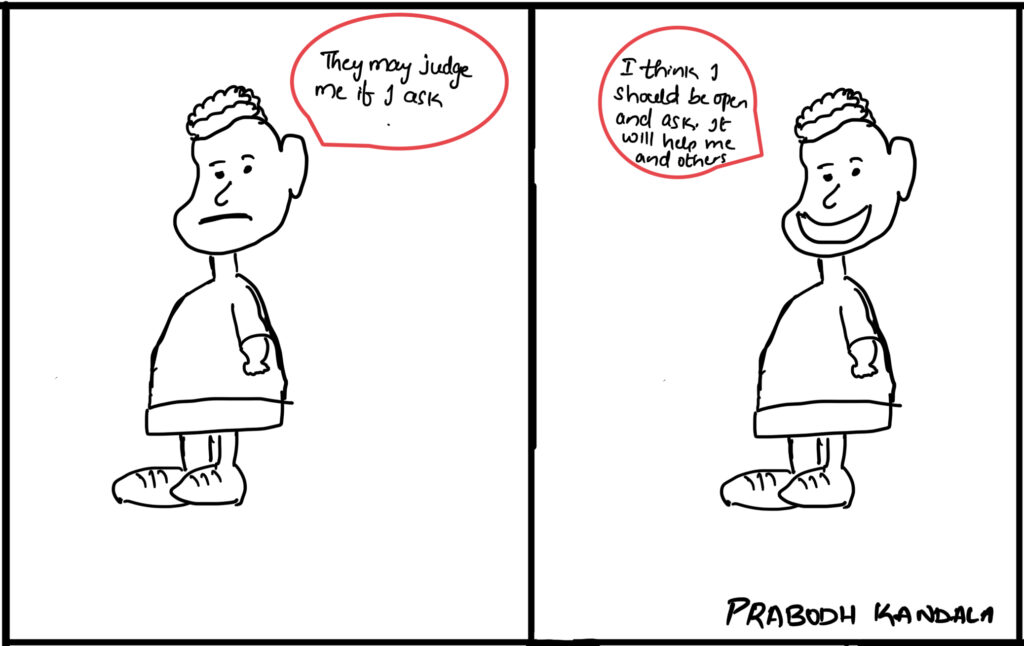
In our early careers, many of us are scared to ask questions. We are worried that people might judge us. Our inner voice stops us from asking questions. It says something like this “I just got selected for this role, my hiring manager or team members may think that I do not know this trivial thing. Let me not ask and try to figure it out myself” This way of thinking do not end there. In an year, the same voice says “It is over an year since I am here, people may judge me that I haven’t gained this skill yet”. This way of thinking keeps on continuing to become a habit that will work against us.
In mid to late careers, we may feel that we should not expose our lack of knowledge to our managers, peers and those who report into us. Our voice will now start saying “At this level, I should have known this. Exposing my lack of knowledge may hinder me from a promotion” or “People may judge me that I should not belong to this leadership position”.
While not being open is more prominent in early careers than in late stage careers, it is still observed in significant number of people who are in later part of their careers.
Irrespective of whenever it is, this way of thinking will do more harm than good. You will become much lesser in confidence as you are denying yourself a new learning. No one is perfect and no one has infinite knowledge anyway.
You grow when you are open about what you don’t know
Here is some perspectives that will help us to be open:
1. People don’t judge us. They help us: While we often worry that our colleagues may judge us when we ask for help or be open about what we know. That is often wrong. No one has time to judge you. They simply help and move on to their next thing.
2. Being honest is always the best and it boosts our confidence: Being your authentic self is the best. No on is perfect and everyone knows that no one can know everything. It is better to say “I do not know about this thing and i would like to learn about it” than being hidden in the dark forever. Moreover, every time you are honest and learn something new, it boosts your confidence and others appreciate that.
3. You inspire others to be open as well: There are many people who think similarly in these situations and stay in their cocoon. Being open will rub off on other people as well. When they ask about something they do not know (and probably you too) and someone else helps, everyone is learning. It is a win-win.
While sometimes ego comes in our way to ask, develop this habit of being open and you will let your career flourish. Next time, if you are in a dilemma or if there is something you don’t know but need to know to do your job. Be yourself and ask it out.
The habit of asking about what we don’t know is a sign of strength and not that of a weakness.
Note: If you are too much dependent on each and every task every day for a long time. You should have been somewhere else anyway.
Let us all be honest. No matter how much we like to stay on course, sometimes we cannot focus in today’s world of constant distractions.
We are either tempted because of notification chimes on our phone or because of an email pop up or someone else intruding our day unexpectedly. All these are just beginning of a distraction. One small distraction will lead to another and that to another and so on.
For example, If someone says something, you tend to browse to check for yourself and then you click on some thing that grabs your attraction and that leads to another click and it goes on and on. And just like that, half of the day of precious work time is gone and you only have about three or four hours left before you can turn your attention to your family or other daily chores.
While you cannot get your lost time back, you can at least try to stay productive for the remaining part of the day.
Here are few tricks to get your day back on track:
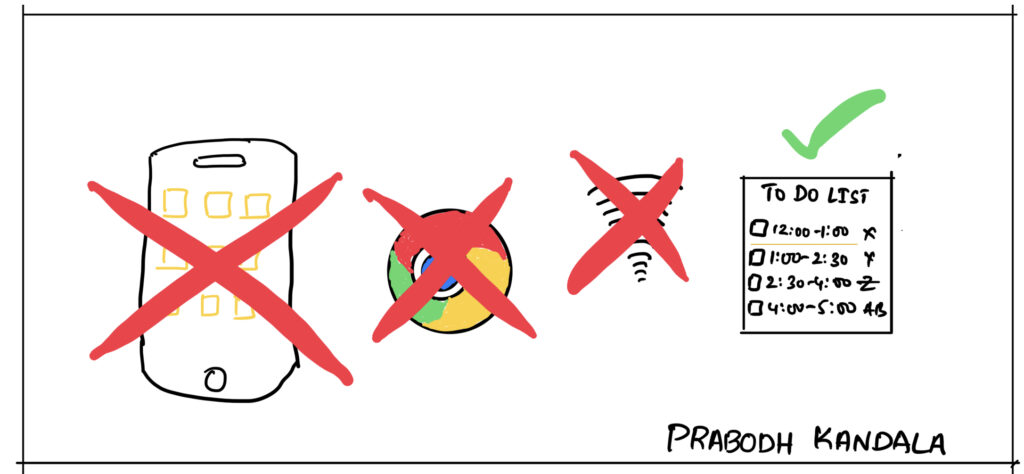
1. Turn off cell phone or keep it away: This is simple. When there is a problem, just remove the source of that problem. Our number one distraction within the last decade are our cell phones and its constant chimes. Statistics show that we browse our phone 96 times a day and that is every 10 minutes on an average. Even if you are someone who has turned off all the notifications, your hands habitually reach out to the cell phone. So, better remove it from your way of focusing.
2. Close all the browsers on the computer: Believe it or not, google and internet browsing wasn’t a distraction not so long ago. But, since we are so connected to internet, google and browsing, this is our another number one distraction along with the phone. I habitually tend to open a news site, sports site and a finance site even without my realization. I bet every one has their own favorite sites they tend to browse first thing in the morning or sometimes without realizing. Just close all the browsers. As long as it is within the sight, you get distracted. So, not only close the browsers and also unpin them from the taskbar to keep it completely out of sight.
3. Write a specific to do list: By specific to do list, I mean write a to do list with your tasks and allocate specific time for each task. This is something that will really help you focus and at least help you complete some amount of work. A specific to do list is something that you need to have every day anyway. Never the less, this kind of to do list will always help no matter what time of the day it is. Be realistic in your expectations here. Don’t try to cram everything here for the day. Move anything that is not important to the next day to do list.
4. Download the documents you need and disconnect the internet: This is If you cannot stay focused even after doing one and two above. Download the documents that you intend to work on to desktop or local drive that is accessible without internet. By doing this, even if you habitually try to open a browser unconsciously, you will come to a realization on why you have closed that in the first place and you will go back to what you are doing. If you have to attend any meetings, always go back and connect to the internet.
You can never get the wasted time back. We should at least try to make the best use of what is left.
Please let me now in comments if you use any other hacks to focus on work. Thanks in advance.
As I was preparing my first post on Medium (which I wrote on Regulatory Buddy) few weeks ago, I noticed that there is “first 100 followers” kind of movement going on in this space.
As a result, many writers in their articles suggested their fellow writers to follow them in return of the favor to get to 100 followers as soon as possible. Reason behind this frenzy is that one can start earning money from Medium content once you reach 100 followers. While this is a great incentive for writers, I believe in not rushing to get to first 100 followers just by following someone so that they can follow you back.
Having 100 True followers that love your writing is better than 100 followers who follow you for the sake of returning a favor.
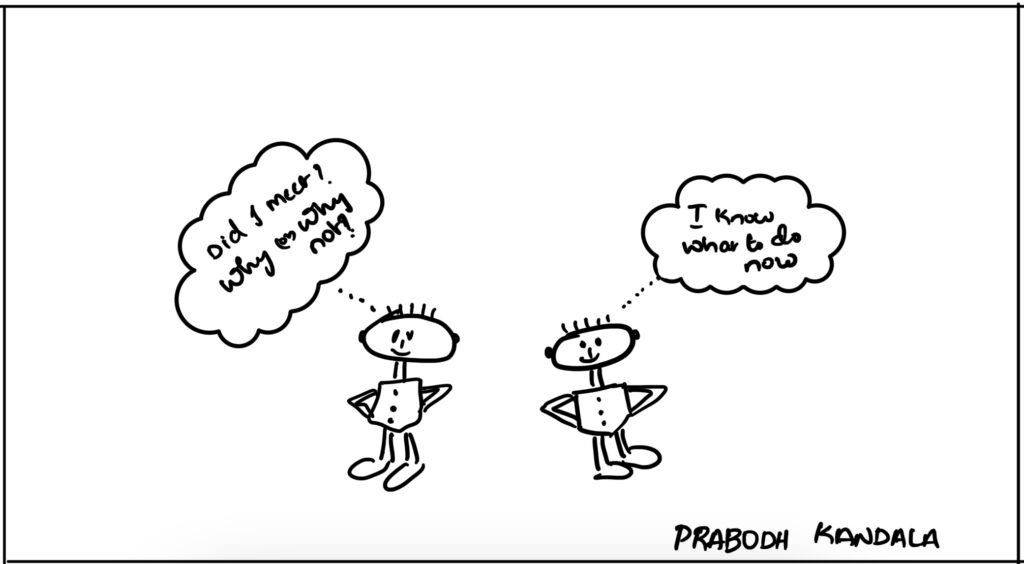
Image created by Prabodh Kandala
Here are three reasons why I am not in a rush and you too should not:
Creators should create for “Love of the craft” and not for money: To some writers, writing is a hobby. To some other writers, it is their passion and it is career to some. What is common for all the writers is the “Love” of writing. I believe in beginning with that. Money, if it has to follow, will follow when time comes. This is true not only for “Medium” platform, but for any creative platform.
“Organic” following trumps “returning the favour” following: Is there ever an incidence where you read a book or watched a movie and loved it so much that you recommended it to someone else. This is exactly what happens with organic following. They are your “True” followers. They carry your message forward by sharing with others or by providing you feedback which will help you grow. They relate to you and treat you like one of their own. Organic following may be slow, but it will explode at some point if you are consistent and doing your craft well. People following you for the sake of following may not read every post of yours.
You would not earn the money you imagined: Let us be honest, we envision that we earn significant side income that will pay our bills, but the money that you are going to make immediately after you get 100 followers may not even buy you a cup of coffee. I understand that everyone has to begin somewhere, but why not be patient and let your following explode steadily vs Peak too quickly and then fizzle.
To tell the truth, I do not know much about monetization on Medium. I can only imagine that Medium wants writers to post more content frequently so that you get more followers quickly. More content you write, more visibility you have and more visibility means more reach. More reach could translate to more followers.
But that doesn’t mean that you have to rush to get followers for the sake of following.
Hello. My name is Prabodh Kandala and thanks for stopping by.
This is my first blogpost and i would like to make it more as a an ice breaking one with some introduction.
I have been thinking for very long to start some kind of blog where I could share what I learnt in my life so far. I love sharing what I learn. I thought i would start a blog but never did. I had written lot of notes for blogs but never published. I thought It is not good enough. Sometimes I thought I started getting old.
Many people whom I talk to when they come seeking suggestions suggested me to start a blog or a YouTube channel. But I was hesistant becuase I thought everyone already knew what I know and several other people might have already done these kinds of youtube channels or blogs.
I finally decided that it is important to put my voice out there even if it sounds trivial or even if it is something that many people have already written or spoken about it. It is possible that few people still connect with what I write and it could work for them. I am not a guru of any sort. I take my stance as a guide. And even if my guidance impacts a single person even for a some part of their life, i will be elated.
Throughout my life i picked advices from several different people, books and podcasts. I used some of them directly. I modified some of them. I am thanksful to everyone of those and feel grateful for all of them to have impacted my life in oneway or the other in terms of career, productivity, personal finance, spirituality, health etc. In a way, I feel this is one way giving it forward.
At this point i have no clue how this blog will shape up to be. But i will write about some of the life advice that helped my life in general and those i implement and few i hope to have implemented. Stay tuned.