One Major Responsibility of Any Healthcare Authority

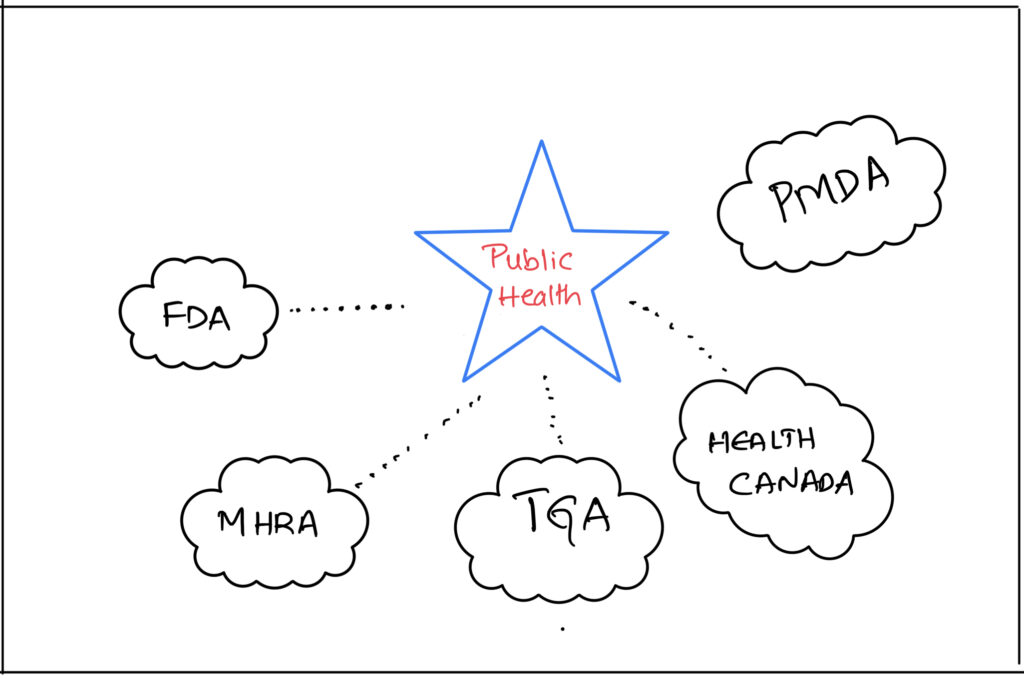
The single major responsibility of any Health Authority/Drug Regulatory Authority is to protect the health of its public.

Remember the term: PUBLIC HEALTH

That is also a reason why majority of drug regulatory authorities are nested under “Department of Health” within their Country.

For example:

  1. Food and Drug Administration (FDA), Drug Regulatory Authority in USA is nested under “The Department of Health and Human Services”.
  2. Medicines and Healthcare products Regulatory Agency (MHRA), the Drug Regulatory Authority in UK falls under “Department of Health and Social Care”
  3. Health Canada (HC), the Drug Regulatory Authority in Canada falls under “The Federal Ministry of Health”
  4. Therapeutics Good Administration (TGA) of Australia falls under Australian Government “Department of Health”
So, how do these authorities protect the public health?

Let us look into the mission statements of some of these agencies to get a better idea:

First Paragraph of United States FDA Mission says:

“The Food and Administration is responsible for protecting the public health by ensuring the safety, efficacy, and security of human and veterinary drugs, biological products, and medical devices; and by ensuring the safety of our nation’s food supply, cosmetics, and products that emit radiation”

Here is the mission statement for United Kingdom’s MHRA:

“The mission of the inspectorate is to protect the pubic health by making sure that medicines are available and are of right quality, applying appropriate standards of regulation”

Here is the mission statement from Republic of India’s Central Drug Standard Control Organization (CDSCO):

“To safeguard and enhance the public health by assuring the safety, efficacy and quality of drugs, cosmetics and medical devices”

Australia’s TGA describes the following in their regulatory performance framework:

“The TGA administers the Therapeutic Goods Act 1989, applying a risk management approach designed to ensure therapeutic goods supplied in Australia meet acceptable standards of quality, safety and efficacy (performance), when necessary.

You can see the commonality between these statements. Irrespective of processes they use to regulate drugs or cosmetics, their bulls eye is to protect the “Public Health”.

In my next post, I will write about how these mission statements fit into drug development.
You may also like

Regulatory Authority or Health Authority?

After I started working in Regulatory Affairs, I started noticing that we use regulatory authority and health authority interchangeably when talking about organizations such as FDA, Health Canada or MHRA (the organizations to which we generally submit drug applications for various purposes).

What is the difference between both terms? Can we really use them interchangeably? Is there a time when we should specifically use “Health Authority”?

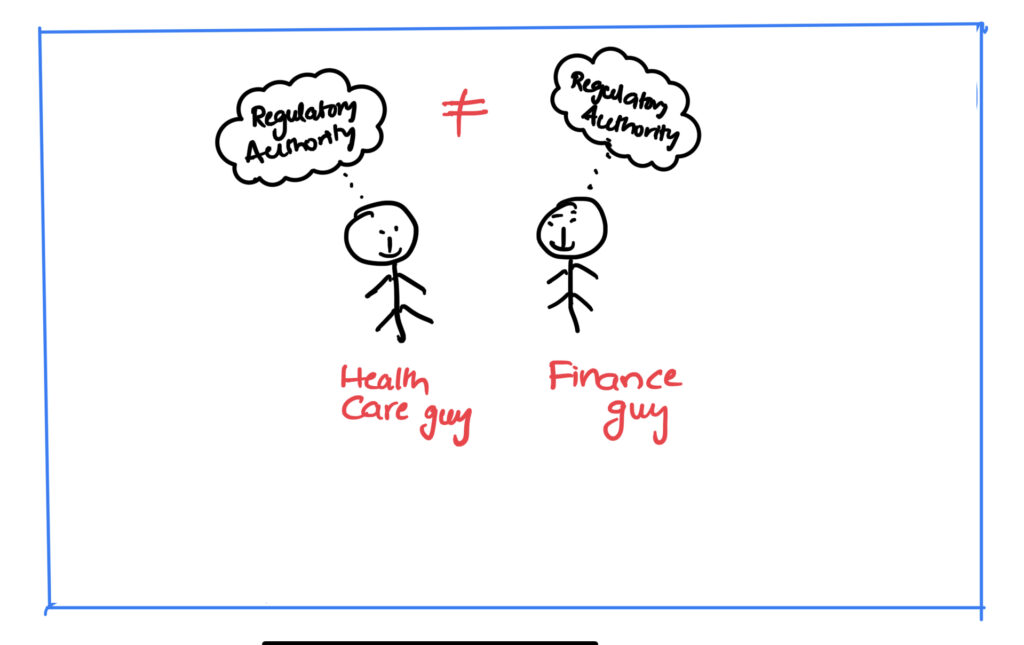
Regulatory Authority is a government agency that regulates businesses in the public interest. In other words, it is an administrative body of government with administrative responsibilities towards its public. Regulatory Authorities define regulations. Regulation is a rule or order telling how something is to be done. In general, whether we know it or not, regulations have an impact in our daily life. They are not specific to a single Industry. Industries such as health care (Pharma/Biotech), finance, utilities, banking are regulated industries. And each industry is regulated by one or more regulatory authorities. For example, within US, Federal Deposit Insurance Corporation (FDIC) and Federal Reserve Board regulates Banks; FDA regulates Food and Drugs.

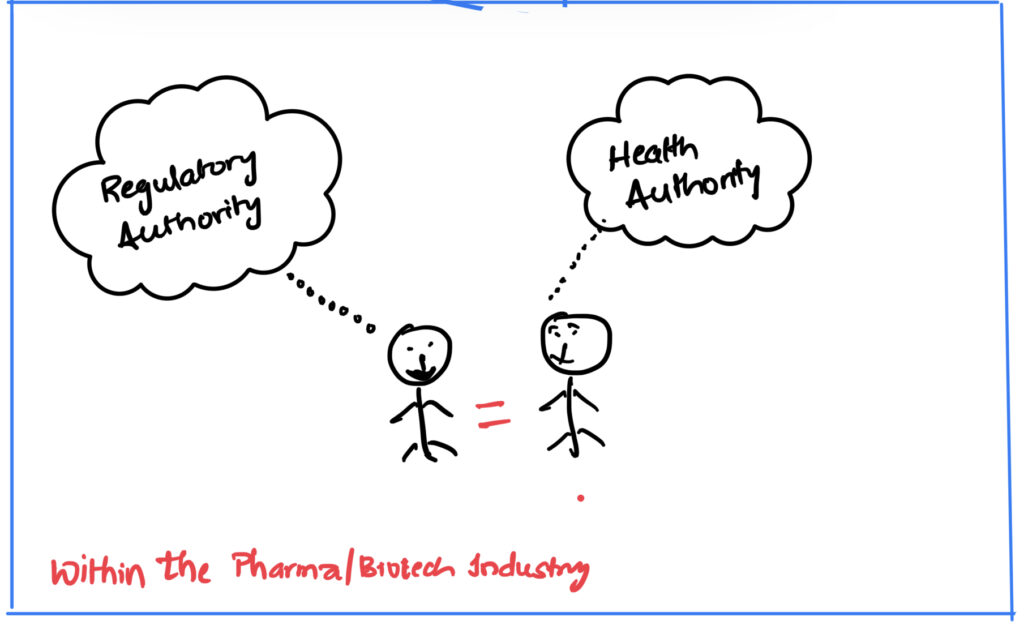
Because the products of Pharma/Biotech field impact public health, we are governed by regulations related to health. Hence, we use regulatory authority or health authority within the industry interchangeably. All health authorities are regulatory authorities but not all regulatory authorities are health authorities. Within our Industry, it is ok to use Health Authority or FDA or Regulatory Authority interchangeably. But you may not be talking about the same agency or authority if you are in a group that has people from different industries.

In a room full of people with different industries, if it every happens, better use the term “Health Authority” or specific agency (such as FDA) to refer to FDA.

You may also like

What is Regulatory Affairs

Before I started my career full time in Regulatory Affairs, my view of it is that Regulatory Affairs gets involved in multiple areas of drug development and as someone who has experience in different areas, i felt it would be a perfect fit for me. But I started pondering about “What is Regulatory Affairs” not until someone asked me what do I do and what it means?. I realized I never articulated it for myself.

I have been working in this profession for about 3 years as of this writing. But when I stumble across this question, i usually do not define in a way I used to about my previous jobs (It was much easier to answer what I do while I was working as a non-clinical scientist in academia or a drug product development scientist in Industry).

Here is how that conversation goes:

My initial responses to someone who asks me what I do in career: “I work in Regulatory Affairs”. At least people outside of Pharmaceutical/Biotech space ask me “what is regulatory affairs”. I tell them, I liaise between regulatory agencies such as FDA and Sponsor company.

“What does that mean?” – They exactly want to know what is it?

I respond “I submit different applications to FDA to perform clinical trials or for approval of drugs to market them”.

“Ohh……..So you do document management then”.

“Yes, it is part of it but i work on regulatory strategy too”

“What is regulatory strategy?” They ask.

“Regulatory strategy involves collaboration with different subject matter experts (clinical, non-clinical and quality teams) to drive drug development and overcome any hurdles in developing and marketing of drugs.

Fact is that Regulatory Affairs is all of the above things, it has strategy component to it, writing component to it, document management component to it, project management component to it, leadership component to it and probably there are few other components that I am not aware of. All these are different roles and responsibilities within Regulatory Affairs but do not define what Regulatory Affairs is.

After couple of such conversations, I felt I really need to know “What Regulatory Affairs” is and should be able to define it precisely during my next such conversation. I started looking it up.

This is when I learnt that “Regulatory Affairs” is created fairly recently from the desire of government and pharmaceutical companies to protect public health by controlling the safety and efficacy of different products.

One book defined regulatory affairs as: “As a discipline, regulatory affairs covers a broad range of specific skills and occupations. Under the best of circumstances, it is composed of a group of people who act as a liaison between the potentially conflicting worlds of government, industry, and consumers to help make sure that marketed products are safe and effective when used as advertised”.

Another book suggests that “Regulatory affairs liaisons manage the process of working with project teams and interacting with the regulatory health agencies, such as the FDA or the International Conference of Harmonization (ICH)”.

Another book noted that “The Regulatory affairs department of a pharmaceutical company is responsible for obtaining approval for new pharmaceutical products and ensuring that approval is maintained for as long as the company wants to keep the product on the market”.

Please note that the above books gave a detailed definition and I put a concise version above.

Eventually, I came up with my own answer for it:

“Regulatory affairs is a core that holds different parts of pharmaceutical/biotech industry together from discovery phase through marketing and life cycle management and it acts as a bridge between Regulatory Authorities, Industry and public”.

I believe many professionals working in Regulatory Affairs and Pharma/Biotech industry in general agree with this one. The strategy, documentation, management, writing etc are actually the responsibilities of Regulatory Affairs professionals.

If someone asks me next time, I know what to answer.

You may also like

Introduction to Regulatory Articles

Drug Development Is A Technically Deep Field With So Many Moving Parts. Regulatory Affairs Is Like A Core That Holds All These Parts Together And Liaise Between The Sponsor (Or A Company Developing The Drug) And Regulatory Agencies (Eg: FDA In US; MHRA In UK) To Protect The Health Of Public By Providing Safe And Efficacious Drugs.

Regulatory Affairs Professionals Are Involved In Reading A Lot: Regulations, Laws, Guidance Documents Etc. A Lot Of Patience Is Required To Read And Understand All These Documents. Even After Putting Those Long Hours Of Reading, You May Forget It Next Time When You Need It Because Regulatory Affairs Is Too Dry Of A Subject To Stick. Of Course, Things Do Tend To Stick As You Read/Do Them Again And Again. But, To Keep Up With Huge Volumes Of Guidance Documents Is A Gigantic Task.

I Am Relatively Young In This Regulatory Field As Of This Writing And Have About 12 Years Of Experience Between Academia And Industry Before Joining Regulatory. One Way To Grow In The Regulatory Is By Doing A Lot Of Reading And Use It Whenever Necessary. Similarly, Few Ways To Learn Anything Quickly Or Get What You Learned To Stick Is By Teaching It To Others Or By Writing Them Down In Your Own Words And That Is What I Am Trying To Do At Regulatory Buddy. Why Not Articulate Whatever I Am Reading So That It Sticks To Me And May Help Others. And Hence This Publication Or Blog.

My Idea Is To Give Following Perspectives To Different Guidance Document Or Articles So That It Is Easy For A Reader To Understand: Why, When, Who, Where And How. But Then, Different Documents Are Different And I Highly Doubt If One Size Will Fit All. So, I Will Tailor As Needed As I Travel Along. I Am Still Learning And Will Always Do.

You may also like